

Visa Guide for Filipino Tourists: South Korea & Japan
Updated for 2026Application forms, requirements, and what to expect based on my experience.
Jump to:
I’m Julian, and I’ve applied for and received a tourist visa at least four times. I created this page to share what I’ve learned with fellow Filipino travelers, since applying for a visa is an essential step for many of us, especially when traveling as tourists.
These are the same tips I’ve shared with my family and friends, and I’m glad their applications were successful too.
I’ve also noticed a few YouTube and TikTok videos referencing my guides, including some from creators who aren’t Filipino. The core process is largely the same wherever you’re from: fill out the form, submit your documents, wait for a decision, then receive your visa. What changes by nationality is the specific paperwork required.
If you’re Filipino, the Korea and Japan guides below are written directly for you. If you hold a different passport, you may still find the form samples and application walkthroughs helpful, but use them only as a general reference and check your own country’s requirements with the official embassy, consulate, or visa application center. More on that in the FAQ.
Do You Need to Apply for a Visa?
In most cases, Filipino tourists need to apply for a visa before traveling to Japan or South Korea. If you hold a passport from another country, check whether you actually need to apply for a visa by visiting the website of the Japanese or Korean embassy or consulate in your country.
Visa rules depend on your passport, travel purpose, length of stay, and current entry policies. Some travelers, including Filipinos under certain conditions, may qualify for visa-free entry, an electronic travel authorization, or a simplified entry process. Others need to apply for a tourist visa before departure.
Most Travlists visa guides are written for Filipino tourists because visa requirements are nationality-specific. I am not able to share the process of visa requirements in other countries as I have not experienced them. If you hold a different passport, you may still find our form samples and application walkthroughs helpful, but always confirm your own entry requirements with the official embassy, consulate, or visa application center before making travel plans.
- Your passport nationality
- Your travel purpose
- Your intended length of stay
- Whether your destination requires a visa, ETA, arrival card, or online registration
- The latest rules from the embassy or official visa center
If you’re a Filipino tourist applying for South Korea or Japan, start with the destination guides below.
Featured Destinations
Start with the visa guide that matches where you’re traveling.
What to Expect When Applying
Every visa application is different. Processing times vary depending on the destination, embassy workload, travel season, public holidays, and whether additional documents are requested. Always check the latest guidance from the embassy or visa application center before making non-refundable travel plans.
From my experience, most of my Korea and Japan visa applications were straightforward because I prepared the required documents carefully before submitting. Even so, I always avoid booking non-refundable flights until my visa has been approved, since processing times can change during busy travel periods.
South Korea and Japan embassies and consulates generally do not require applicants to show confirmed round-trip tickets or paid hotel bookings for tourist visa applications. I know some friends who book months or even years in advance because of seat sales, then apply for a visa after. That can work for some travelers, but for me, I prefer to stay on the safe side and hold off on actual purchases until I receive my visa.
South Korea Visa Guide
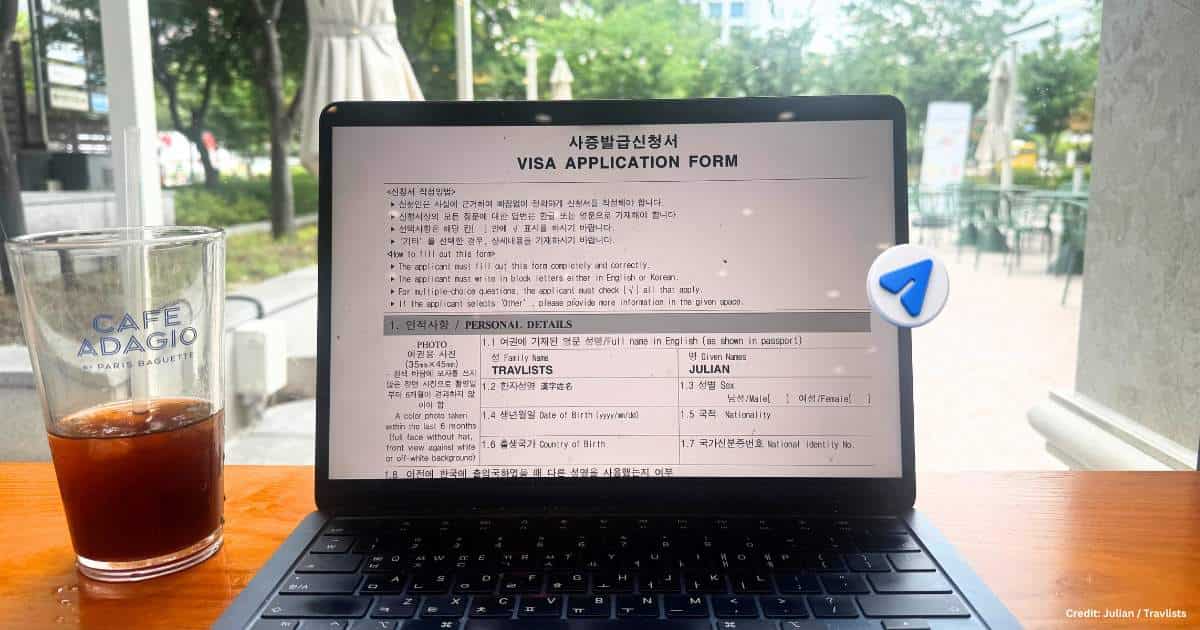
South Korea is one of the most requested visas among Filipino travelers I write for, and also one of the more tedious ones to get right on the first try. Based on my experience, preparing the requirements can be done in less than a week if your documents are ready, but the actual visa processing time can vary.
Here’s everything I’ve put together on it.
Requirements
Start here if you haven’t applied before. This is a full breakdown of what you’ll need to submit as a Filipino tourist, including the standard documents and the financial proof the embassy asks for like the ITR and bank certificate (bank statements are not required).
As an update, the certificate of employment no longer needs to include an HR or employer landline number. Mobile numbers are now allowed.
Updated South Korea Visa Requirements for Filipino Tourists →Application Form
The visa application form trips up a lot of first-timers, mostly on the sections asking for travel history and financial sponsor details. I walk through it field by field and include a sample PDF.
How to Fill Out the South Korea Visa Application Form →Cover Letter
Not always required, but a cover letter can help explain your travel purpose clearly, especially if your documents alone don’t tell the full story.
Sample Cover Letter for Korean Visa Applicants →Simplified Requirements for Credit Card Holders
If you hold an eligible BPI, BDO, Metrobank, RCBC, or PNB credit card, you may qualify for a simplified document list for Korean visa applications. This is worth checking before you gather everything else, especially if you hold a qualified gold or elite credit card.
At the time of writing, the simplified credit card holder program is listed as valid until December 31, 2026. Based on my observation, these simplified visa application requirements are typically extended. Do visit the participating banks’ website for the latest period.
Simplified Korean Visa Requirements for Select BPI, RCBC, and Metrobank Credit Card Holders →Check Your Application Status
Once submitted, here’s how to check where your application stands.
How to Check Your South Korea Visa Application Status →Important Korea Visa Notes
Korea visa applications in the Philippines are no longer submitted directly at the embassy for regular applicants. Applications are usually submitted through the Korea Visa Application Center in BGC, Taguig, or through designated travel agencies.
A Data Privacy Consent Form is required for all applicants under data privacy requirements.
As of June 15, 2026, the listed processing time is 10 days, but this can change depending on season, holidays, embassy workload, and application volume. Always check the current processing time before applying.
Your passport should be valid for at least six months beyond your intended period of stay.
Someone may apply on behalf of the applicant only under specific allowed cases, such as through a designated travel agency, qualified family member, co-worker with proof of relationship, travel companion with supporting documents, or postal application through W Express, depending on the current KVAC rules.
If you already have an existing Korean visa at the time of travel, your visa may be prioritized for use even if you are only passing through a visa-free region such as Jeju. For example, if you’re traveling from the Philippines → Jeju, South Korea → Philippines and you have a valid Korean visa, your visa may be tagged as used. Always check the latest official guidance before planning a visa-free transit or regional itinerary.
Japan Visa Guide
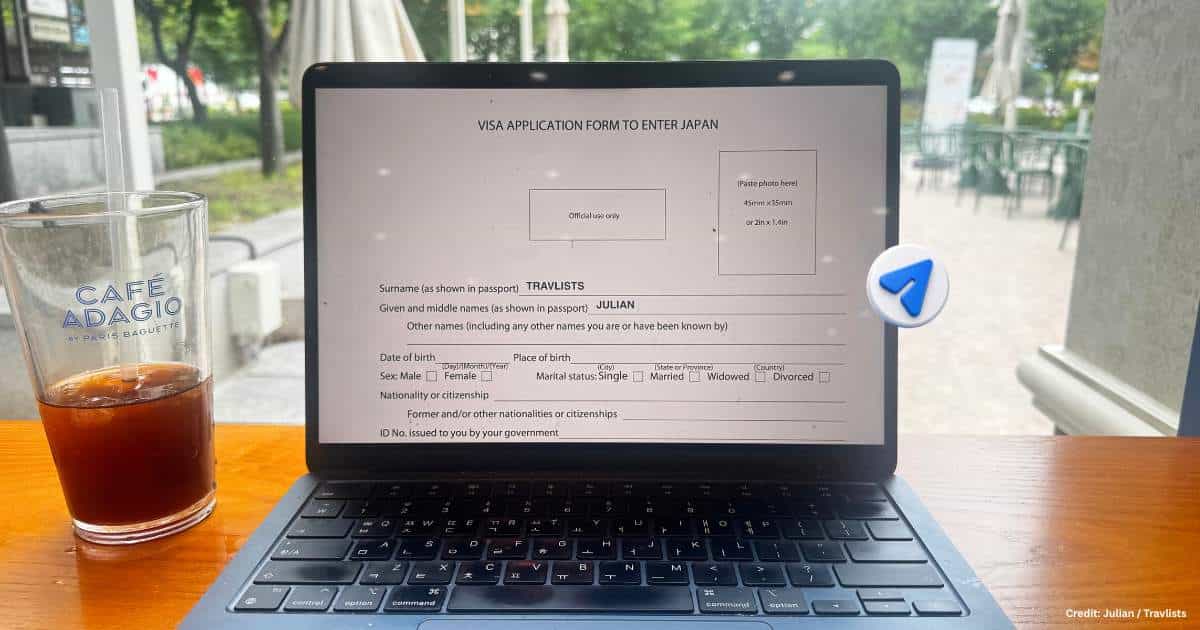
Japan’s visa process for Filipino tourists is generally more straightforward than Korea’s, but the paperwork still has a few parts that confuse first-time applicants, particularly the Schedule of Stay form.
Requirements
An overview of what Filipino tourists need to prepare, from passport requirements to financial documents.
Japan Visa Application Guide & Requirements for Filipinos →Application Form
A field-by-field walkthrough of the Japan visa application form, with a filled-out sample so you can see exactly what goes where.
How to Fill Out the Japan Visa Application Form →Schedule of Stay
This form asks for a day-by-day itinerary of your trip. I show a sample itinerary so you’re not starting from a blank page.
How to Fill Out the Japan Schedule of Stay Form →Cover Letter
A sample cover letter for your Japan visa application, useful if you want to explain your trip purpose or sponsor relationship clearly.
Sample Cover Letter for Your Japan Visa Application →Important Japan Visa Notes
Due to the increase in visa applications after the COVID-19 pandemic, the Embassy of Japan in the Philippines introduced a new Visa Center system starting April 2025 to help improve visa processing efficiency.
For short-term stay visas, Japan may issue single-entry, double-entry, or multiple-entry visas depending on the applicant’s purpose, background, and submitted documents. Submitting a request for a multiple-entry visa does not guarantee that a multiple-entry visa will be issued.
For short-term visas, periods of stay may be 15 days, 30 days, or 90 days. The final visa issued depends on the purpose of travel and examination of the application.
The standard examination period listed by the Embassy of Japan is five working days from the day after the acceptance of application. However, applications can take longer if additional checking, documents, interviews, or inquiries are required.
If your departure date is approaching, the embassy generally cannot speed up a decision before the necessary examination is complete. Apply as soon as your travel plan has been decided.
A visa does not guarantee departure from the Philippines or entry into Japan. Philippine immigration authorities handle departure from the Philippines, while Japanese immigration authorities make the final landing decision when you arrive in Japan.
If your Japan visa application is rejected, the embassy generally does not provide the specific reason. If you apply again for the same purpose of visit within six months from the rejection, your application may not be accepted, except in certain humanitarian or necessary cases. Always consult the embassy or accredited agency before reapplying.
Do not provide false or misleading information in your application. Our guides show the process and help you prepare, but compliance with the document list does not guarantee approval. Visa applications are usually examined based on the applicant’s full background and individual circumstances.
Before You Apply
A few things to keep in mind before you start:
These guides are written for leisure and short-term tourist visas only, not work, study, recruitment, or long-term visas.
Visa requirements and application processes change. I update these guides when I catch changes, but always confirm current requirements directly with the embassy, consulate, visa center, or accredited agency before you apply.
I’m not a travel agent or visa consultant. These guides reflect my own experience and research, not professional visa handling services.
Following a checklist does not guarantee approval. Visa applications are still evaluated based on your documents, background, travel purpose, financial capacity, and individual circumstances.
Do not submit false, misleading, or inconsistent information. If something in your application needs explanation, use the appropriate supporting documents or a cover letter.
While Waiting for Approval
Waiting for your visa decision doesn’t mean you can’t start planning. Here’s what’s safer to do in the meantime, and what I would personally hold off on.
Safe to do:
- Draft an itinerary
- Research hotels and neighborhoods
- Compare eSIM options for your destination
- Look into transportation options such as trains, passes, airport transfers, and airport buses
- Check attraction prices and opening hours
- Save flexible booking options for later
Hold off on:
- Booking non-refundable flights or hotels
- Paying for anything you cannot refund if your visa is delayed or denied
- Making fixed travel plans that depend on a visa result you have not received yet
There is no direct rule that says you cannot book before your visa is approved. You can, but you should understand the risk. If you really want to book early, choose flexible cancellation whenever possible.
Once your visa is approved, you can start booking the parts of your trip that are harder to finalize before approval. See the next section for that.
After Your Visa Is Approved 🎉
Congratulations! Once your visa is approved, it’s time to plan the rest of your trip. Here’s what most travelers book next.
Stay Connected
Compare eSIMs for Korea, Japan, East Asia, Asia Pacific, or global travel so you have mobile data as soon as you land.
Browse eSIM Guides →Plan Your Transportation
Airport transfers, rail passes, transport cards, and city transportation can often be booked before your trip. We have transportation sections for both Korea and Japan.
Transportation Hub →Choose Attractions & Tours
Compare theme parks, city passes, observation decks, guided tours, cruises, and other bookable experiences before finalizing your itinerary.
Attractions & Tours Hub →Find a Place to Stay
Browse hotel guides, area recommendations, resort reviews, and practical advice on where to stay for your trip.
Browse Hotel Guides →Save with Promo Codes
Planning to book attractions, airport transfers, hotels, or other travel essentials? Many of the providers I recommend offer exclusive discounts for Travlists readers.
Browse Travel Promo Codes →One promo code to remember for your trip: TRAVLISTS
For Klook, the Travlists promo code TRAVLISTS currently gives a 3–5% discount on eligible bookings. At the time of writing, the code is listed as valid until 2040. Once registered in your account, it is usually valid for several months and can be used up to three times, depending on Klook’s current promo terms.
I regularly verify and update these promo codes, but availability, eligibility, discount rates, and validity may change without notice.
Latest Visa Guides
Browse more Travlists visa guides, form samples, and application notes for Filipino travelers.
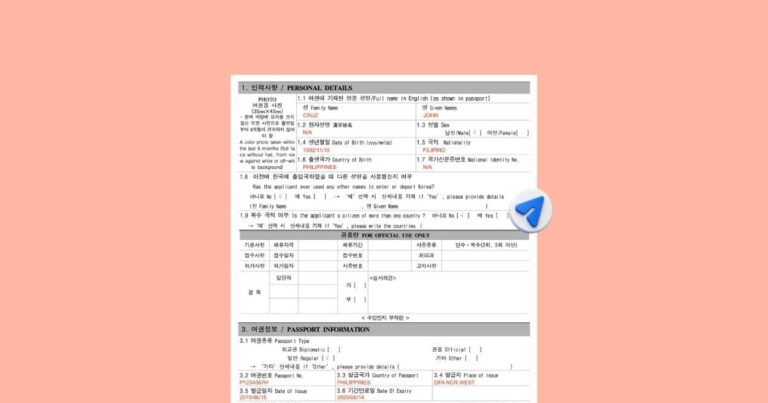
How to Fill Out the South Korea Visa Application Form: Step-by-Step Guide for Filipino Tourists
Getting ready to fill out the South Korea visa application form? Check out our step-by-step guide below and...

LIST: Updated South Korea Visa Requirements for Filipino Tourists
Preparing to get a Korean visa? Check out the requirements for employees, business owners, students, and other types...
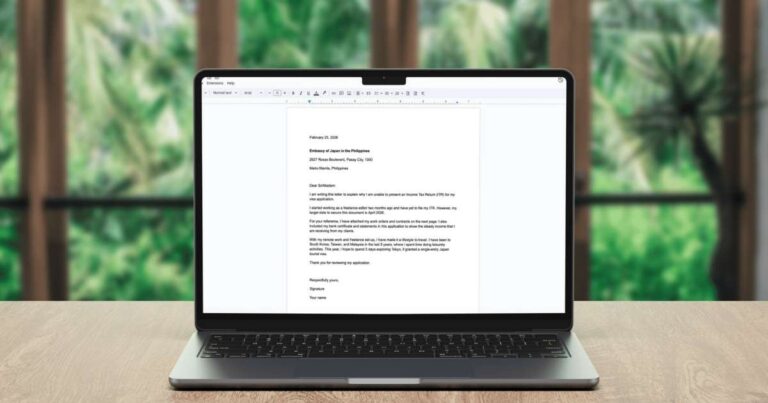
Sample Cover Letter for Your Japan Visa Application
If you’re missing a Japan visa requirement like the ITR, write a cover letter that’s addressed to the...
How to Fill Out the Japan Schedule of Stay Form
Need help in accomplishing the Schedule of Stay form for your Japan visa application? View our guide and...
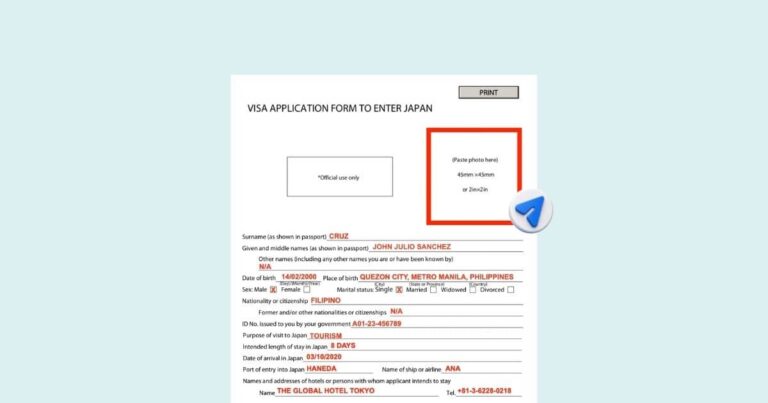
How to Fill Out the Japan Visa Application Form
Need help in filling out the Japan visa application form? Check out our step-by-step guide and sample!

Japan Visa Application Guide & Requirements for Filipinos
Check out the list of the requirements for Filipino tourists and non-tourists here.
How to Check Your South Korea Visa Application Status
To check the status of your visa application, you will need to provide your passport number, first name,...

Simplified Korean Visa Requirements for Select BPI, RCBC, and Metrobank Credit Card Holders
From July 22-December 31, 2024, holders of select Metrobank, RCBC, and BPI credit cards are exempted to submit...

Sample Cover Letter for Korean Visa Applicants
If you’re missing a Korean visa requirement like the ITR, you may opt to write a cover letter...
FAQ
How early should I apply for my visa?
Single-entry Korean and Japan visas are typically valid for use 90 days from the date of issuance, meaning your travel must fall within that 3-month window. So if you want to travel in January 2027, you can apply as early as around the last week of September or October, depending on processing timelines. You can also apply in November, December, or even January. Check the requirements guide for your destination, or the embassy directly, for the current application window.
Can visa requirements change?
Based on my experience applying since 2016, up to what I’m reading now for Travlists, the core requirements rarely change. If anything, some get removed to make the process easier for applicants. That said, requirements can still shift, so always follow the list given by the visa application center or travel agency at the time of your application. I update these guides when I catch changes, but always confirm current requirements directly with the official source before applying.
Should I book my flights before or after getting my visa?
I personally recommend booking after your visa is approved, especially if the flight or hotel is non-refundable. Processing times can shift, and you don’t want to be stuck with a booking you can’t use if your application takes longer than expected or gets denied.
Some travelers book early because of seat sales, and that is their choice. If you do this, choose flexible or refundable options whenever possible.
Do I need a confirmed flight or hotel booking before applying?
For South Korea and Japan tourist visa applications, confirmed round-trip tickets and paid hotel bookings are generally not required for regular tourist applications. You may need to provide a travel plan, itinerary, or schedule of stay instead.
Always check the latest requirements for your specific visa type before applying.
Do I need a cover letter?
Not always required, but it can help, especially if your documents alone don’t clearly explain your travel purpose, financial situation, sponsor relationship, or itinerary. I’ve included sample cover letters for both Korea and Japan in the guides above.
I’ve personally written a cover letter in 3 of my applications to explain why I didn’t have an ITR back when I was a remote worker based in Manila. Quick tip: keep it concise.
What if my visa application is rejected?
A rejection can be disappointing, but it doesn’t always mean you won’t be approved in the future. Many travelers are approved later after addressing missing documents, strengthening their financial evidence, clarifying their travel plans, or waiting for the required reapplication period.
Since embassies often don’t provide detailed reasons for every refusal, review your application carefully before submitting another one, and always follow the latest embassy guidance.
For Japan, applicants who were rejected may not be accepted for the same purpose of visit within six months from the rejection, except in certain necessary or humanitarian cases. Confirm directly with the embassy or accredited agency before reapplying.
One benefit of applying through a designated agency is that you can get professional advice if you feel a part of your application is weak.
Does submitting complete documents guarantee approval?
No. Submitting complete documents does not guarantee visa approval. It only means your application is ready for examination. The final decision depends on the embassy or consulate’s review of your full background, travel purpose, financial capacity, documents, and individual circumstances.
Do these guides apply to non-Filipino travelers?
The general process — fill out the form, submit documents, wait for approval, then receive your visa — is similar across many nationalities. However, specific requirements, forms, fees, exemptions, and submission rules vary depending on your passport.
If you are not Filipino, use these guides as a general reference only and confirm your own country’s requirements with the relevant embassy, consulate, or visa application center.
Resources
For the most current requirements, fees, processing times, appointment systems, and submission rules, always check the official sources directly.
Embassy processes, fees, forms, visa center rules, and processing times can change, so treat this as a starting point, not a guarantee.
About the author

I’m Julian, the editor and co-founder behind Travlists. I’ve applied for and received tourist visas multiple times, including South Korea and Japan visas, and I write these guides to help Filipino travelers understand the process before they prepare their documents.
My goal is to make visa applications easier to understand by combining personal application experience, form samples, official source checks, document research, screenshots, and practical notes from helping family and friends prepare their own applications.